Which air-to-water heat pump do I need?
6 min read
Monoblock or split, what power, radiators or underfloor heating: what to weigh up before choosing a heat pump for your home.

How an air-to-water heat pump works
A heat pump takes heat from the outdoor air, even when it is cold outside, and passes it to the water in the heating system. That water warms the radiators or the underfloor heating, and in summer most models can also cool.
For every kilowatt-hour of electricity it delivers between 3 and 5 kilowatt-hours of heat, depending on the outdoor temperature and the water temperature. The lower the water temperature it has to reach, the more economical it is.
Monoblock or split
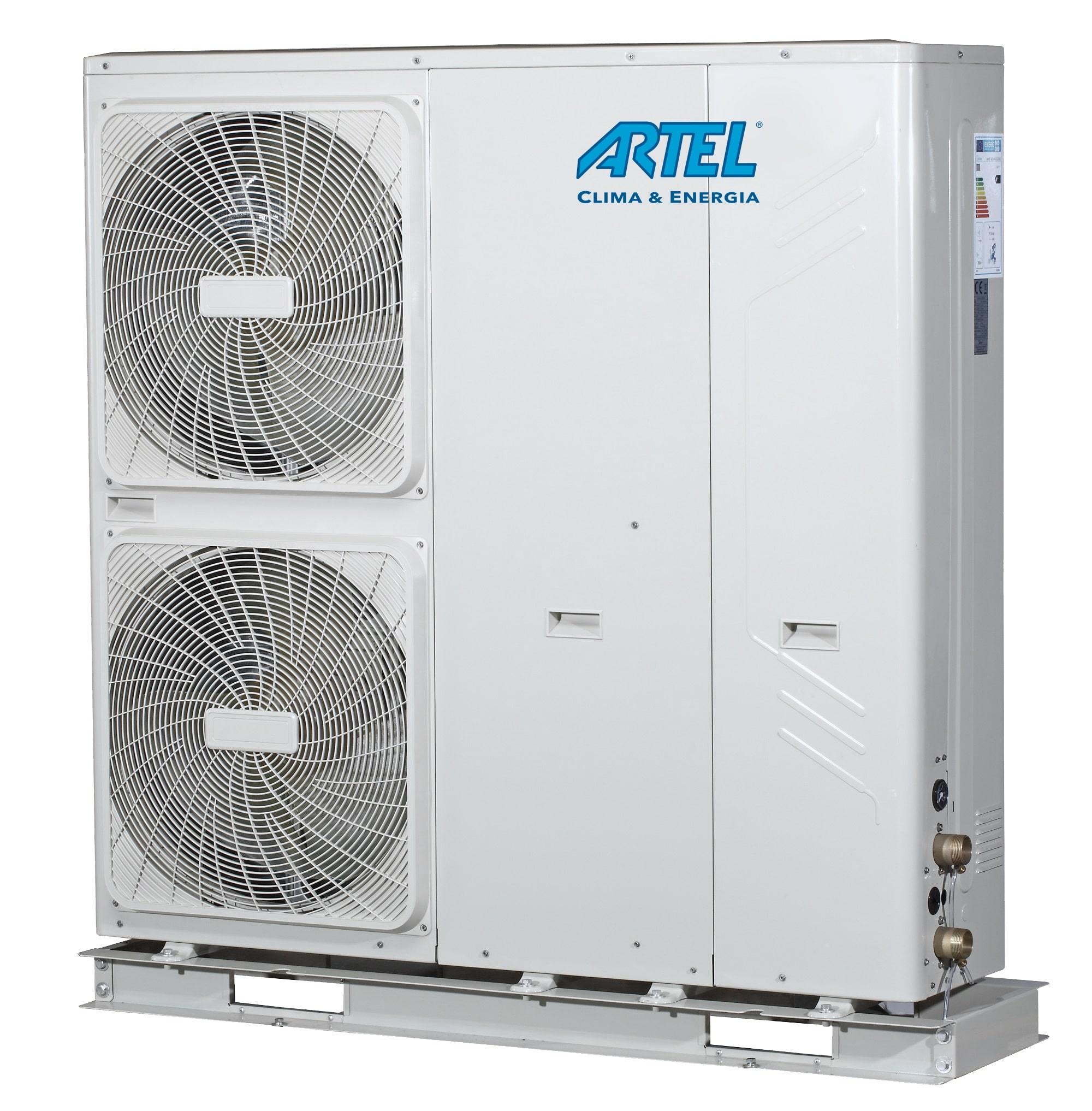
In a monoblock the whole refrigerant circuit is in the outdoor unit, and only water pipes run into the house. Installation is simpler, but the outdoor pipes must be well insulated and protected from freezing.
In a split system the outdoor unit connects to an indoor hydraulic module through refrigerant lines. It suits longer distances to the house or little space outside. Work on the refrigerant circuit is done only by technicians certified for fluorinated gases.
What power do I need
The power depends on the building's heat loss. As a guide, per square metre of heated floor:
- new, very well insulated house: 30–40 W/m²
- insulated older house: 50–70 W/m²
- uninsulated house: 80–120 W/m²
Example: a well-insulated 120 m² house at 50 W/m² needs about 6 kW, so a 7 to 8 kW unit is chosen. If the heat pump also heats the domestic water, add a margin. We set the exact power at the site visit, from a heat-loss calculation.
Radiators or underfloor heating
Underfloor heating runs on water at 30 to 40 °C and is the ideal partner for a heat pump. Radiators usually want 45–55 °C, which lowers the efficiency. The system works with existing radiators, but some often need replacing with larger ones, especially in rooms with many windows.
Hot water and a buffer tank
For a family of four, a 200 to 300 litre cylinder with a heat-pump coil is usually enough. A buffer tank is added when the system holds little water or has several separate zones, so the unit runs more steadily and switches on less often.
Where the outdoor unit goes
The outdoor unit needs free space in front and at the sides to draw and blow air. It sits on a stand above snow level, with a drain for the condensate, and away from bedroom windows and the neighbours because of the noise.
The figures in the guides are approximate. We do the exact sizing at the site visit.